We are inspired by our Mount Vernon Community of students, families, and staff who are showing great resilience, determination, and creativity to stay connected with one another and to support student learning. Their efforts to continue to make Every Day Count during this unprecedented time are amazing! Teaching & Learning staff are excited to share resources and ideas for staying connected and supporting student learning. Students are likely to hear from their classmates, teachers, and school sites with ways to stay engaged. Maintaining our sense of community supports our social-emotional health and will help each of us to remain engaged in learning. We hope you engage with and enjoy the ideas we post on our Every Day Counts! student learning blog. Stay tuned--we plan to begin posting on Monday, March 23rd! Many of the resources we will be sharing are available to all students via the MV TECHSMART K-12 DIGITAL LITERACY site.


Thursday, June 11, 2020

6-11-2020 Learn How to Make a Paper Balloon

Practice the art of Origami and learn how to make a paper balloon.  


Find out more about this activity and learn more about how different shapes are used in architecture at this link.  

  • How could you decorate your balloons? 
  • Try different sizes. 
  • What other shapes can you create with Origami? 
Martha Thornburgh: Mount Vernon Schools Teaching and Learning

Wednesday, June 10, 2020

6-10-2020 MVHS Teacher Mr. Zickler read "In the Night Kitchen"

Listen to the story "The Night Kitchen" by Maurice Sendak read by MVHS Teacher Mr. Paul Zickler.  


Voices of the Children is sharing videos of local community members reading their favorite children's books some in English and some in Spanish.  Check out the growing playlist here.  

Monday, June 8, 2020

6-9-2020 Microns and Masks

How big is one coronavirus? How big is a micron? How well do these masks protect against the virus? What can you observe about the size of particles mentioned? Why are we wearing masks?

Click on this link to see the resources and do the activity.  HowBigMicron.pdf

Activity from YummyMath


Martha Thornburgh: Mount Vernon Schools Teaching and Learning

Sunday, June 7, 2020

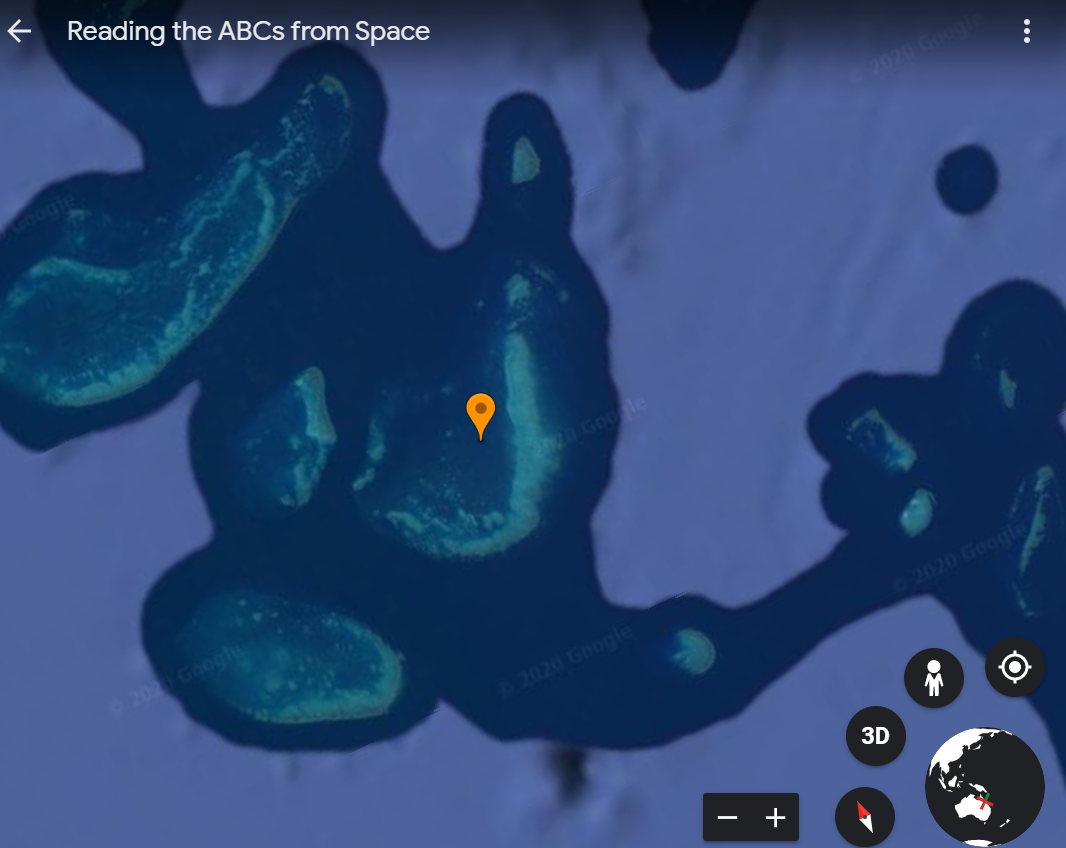
6-8-2020 Reading the ABCs from Space

Take a tour around the earth and spot the letters of the alphabet made by land forms and man made objects.  As you explore, what else can you discover?  

Can you find the first letter of your name? 
What countries did you discover? 
How were the different letters formed?  Mountains? Islands? Canyons? Rivers? 


Martha Thornburgh: Mount Vernon Schools Teaching and Learning

Friday, June 5, 2020

6-5-2020 Access Resources Online with a Mount Vernon Library Card

Right now, our Mount Vernon Library is closed due to COVID19, but did you know that there are many great resources available to you online using your library card? 


Here are a few ideas.   

  • You can check out audio books, music, ebooks. (Many Spanish titles) 
  • You can access Tumble Books which is a great resource for children's books. (Many Spanish titles)
  • You can learn a new language with Rosetta Stone.
  • You can research a product with Consumer Reports
  • You can learn about other countries with Culture Grams.  
  • You can read the Skagit Valley Herald or find archived articles. 
  • You can take online classes with Lynda.com
If you are a Mount Vernon resident, you can go online and apply for a Library Card to begin using our great library even before the doors are back open. Click here to learn more about getting a Library Card. 

Martha Thornburgh: Mount Vernon Schools Teaching and Learning

Thursday, June 4, 2020

6-4-2020 Learn a Card Trick

Anyone for a card trick?


This is a game where you tell a friend you will be able to determine the exact card they select from a deck of cards.

Each card has a number value.* 


Suppose your friend selects a 4 of Hearts!
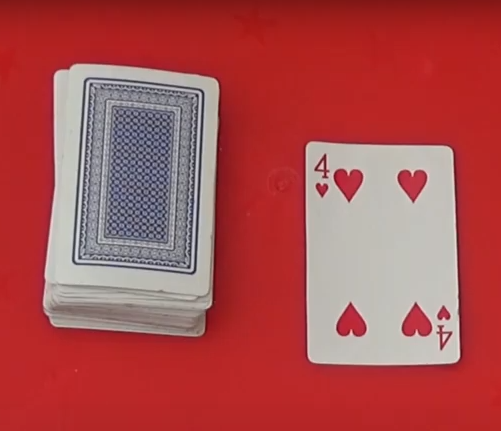
Ask your friend to:


  1. Double the card number         4 x 2 = 8

  2. Add 3                                           8 + 3 = 11

  3. Multiply by 5                              11 x 5 = 55

  4. Add 1 if the card is a Club

Add 2 if the card is a Heart      55 + 2 = 57

Add 3 if the card is a Spade

Add 4 if the card is a Diamond

  1. Ask your friend for the number


Then you take the number and secretly subtract 15 from the total they give you.  57-15 = 42

Now you tell your friend that you know exactly what card they are holding.  


The first digit is a 4 so the number on their card is a 4.  Use the key above to see if the second digit tells whether the card is a Club, Heart, Spade or Diamond.  Since it is a 2, the card is a heart.  Your friend has the 4 of Hearts.

*Aces are 1, Jacks are 11, Queens are 12 and Kings are 13


Mary Ellen Huggins: Mount Vernon Schools Teaching and Learning


Wednesday, June 3, 2020

6-3-2020 Make a Sundial

You can create an accurate way to tell time using just rocks, sticks and the sun!  

Check out this article from ScienceKidsatHome.com


Sundial


Materials


  • stick
  • rocks or chalk
  • 1 cup of playdough (optional)
  • watch or clock

1.Find a sunny spot in a lawn or even on a sidewalk.
2.Put the stick in the ground. If it is a sidewalk, put the stick in the playdough
and use that to hold the stick upright on cement.
3. Throughout the day, place a rock, or mark with chalk for each hour indicating
where the shadow falls at that time. Depending on your time, you may have
to place rocks over a couple of days before your sundial is complete.
4. Now your sundial is ready to use. When you want to tell the time, just look
for the shadow. In the picture above, the stones are used to mark each hour
from 7am to 7pm. The picture was taken at 9:15 in the morning.

In the beginning, you may find it hard to be very precise. With a bit of practice,
you should be able to tell time to the nearest 15 minutes, and maybe even more
closely.
 It's about 12:30 in this picture.


Alternative
Use chalk and a ruler to draw in the shadow lines, instead of placing rocks on
the hour.

You can print out a sundial.

Tuesday, June 2, 2020

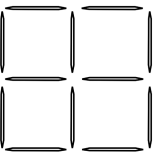
6-2-2020 More Toothpicks

More Toothpicks and Squares


How many toothpicks do you need to make one square?

4

How many toothpicks do you need to make two squares?


Three squares?


What pattern do you notice?


Can you predict how many toothpicks you will need to make nine squares? 


Extension:


Given three squares:


Below are four squares. Can you move two of the toothpicks so that you can have seven squares?


Mary Ellen Huggins: Mount Vernon Schools Teaching and Learning


Monday, June 1, 2020

6-1-2020 Draw a Self Portrait

Learn how to draw a portrait of a very important person.  YOU!  Follow along with this video and get tips on how to draw a self portrait.  What makes you unique?  


Martha Thornburgh: Mount Vernon Schools Teaching and Learning

Thursday, May 28, 2020

5-29-2020 Be Internet Awesome

Play this interactive game to learn about how to be a good digital citizen on the internet.  


Be Internet Awesome: Find more activities on helping your family stay safe online including a Coloring Book, Tip Sheets and a Family Guide.  Materials are available in English and Spanish.  

Martha Thornburgh: Mount Vernon Schools Teaching and Learning
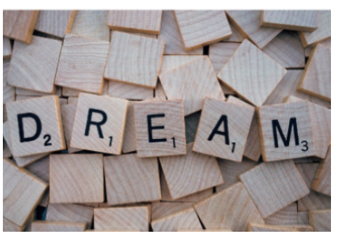
5-28-2020 Scrabble Math

SCRABBLE MATH


K

The “M” tile has the number 3 on it. Can you start counting at 3 and count up to 42?


Grade 1

There are about 46 tiles in the picture. Can you start counting at 46 and count up to 120?

Grade 2

Use the digits on the tiles to create 2 numbers with a sum or difference close to 100.

Grade 3

The”M” tile is worth 3 points. How many 3’s are in 18? 

How many 3’s are in 24?

Grade 4

Using all the digits on the tiles, what is the greatest number you can make? Write it in expanded form.

Grade 5

Use all of the digits on the tiles and a decimal point to create two numbers with a sum or difference close to 2.55.

Extension

Find other scrabble pieces and create your own questions for family members of students in your class.  If you do not have a Scrabble board game, look up scrabble letters on Google.


Mary Ellen Huggins: Mount Vernon Schools Teaching and Learning

Tuesday, May 26, 2020

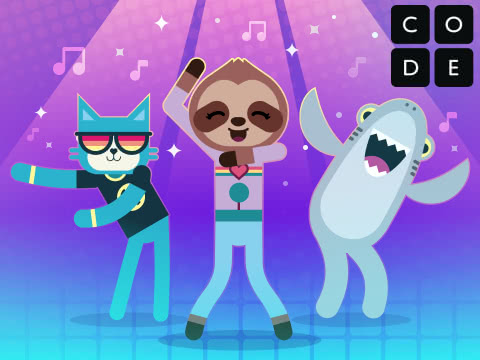
5-27-2020 Code a Dance Party


Jump into Code.org and Code a Dance Party.   Code.org will take you through all the steps to help you create the code that gets your characters dancing.  When you finish the Dance Party challenge choose another activity and learn even more about coding.  There are coding activities for preschoolers to senior citizens.  Give it a try.  It is a great way to practice problem solving, sequencing, logic, algebraic thinking and creativity.  


Martha Thornburgh: Mount Vernon Schools Teaching and Learning

Monday, May 25, 2020

5-26-2020 Build a Straw Rocket


Learn how to make a Straw Rocket.  Experiment to see how you can improve your design by making a new rocket and changing one thing each time until you find the very best way to make your rocket so that it will fly the farthest.